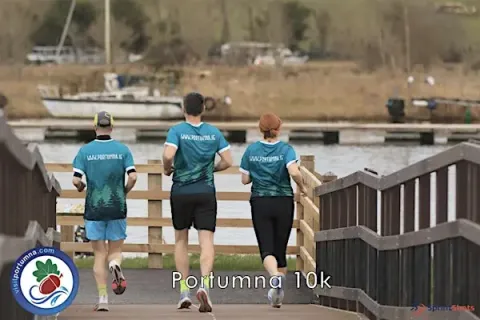
Run Portumna 10k 2026 Training Plan Launched
Portumna is getting ready to put its best foot forward with the launch of an exciting Portumna 10k Training Plan, designed to help local people prepare for the annual race in a fun, supportive and achievable way. The programme, coordinated through Portumna Chamber of Commerce, offers step-by-step guidance for beginners and improvers alike, encouraging participants to build fitness while enjoying the many beautiful routes around the Forest Park and town.
The initiative aims to bring the community together in the months leading up to the event, promoting health, wellbeing and social connection. Local organisers are encouraging anyone who has ever thought about taking part in the 10k—whether walking, jogging or running—to join in and give it a go. With structured sessions, helpful tips and plenty of encouragement along the way, the new training plan is set to make this year’s Portumna 10k the most inclusive and enjoyable yet.
Beginner Plan for the Portumna 10km
8 week beginner-friendly 10 km training programme ending on Race Day: 15 March 2026. It assumes you can comfortably walk for 45–60 minutes and jog lightly for short intervals.
- Start: Monday 19 January 2026
- Race Day: Sunday 15 March 2026
- Runs per week: 3
- Optional: Easy walking on rest days
Key
- IR = Interval Run (run / walk)
- E = Easy Run (can include walk breaks)
- LR = Long Run (very relaxed)
- OW = Optional Walk
Week 1 (Jan 19–25)
- Tue: IR 1 min run / 2 min walk × 6
- Thu: E 20–25 min
- Sun: LR 25–30 min
- Optional: OW 20–30 min Saturday
Training Tip: This first week is all about easing into running gently and building confidence. Keep every run relaxed and comfortable—nothing should feel rushed or forced. The run/walk structure allows your body to adapt without excessive strain on joints or muscles. Your pace should be slow enough that you could talk in short sentences. Don't worry about how much you're running versus walking; both count as training. Rest days are just as important as running days, so take them seriously. Light walking and gentle stretching can help reduce stiffness. Expect some mild muscle awareness, especially in your calves or hips, but nothing sharp or painful. Focus on establishing a routine rather than performance. If you finish the week feeling capable and motivated to continue, you're doing it exactly right.
Week 2 (Jan 26–Feb 1)
- Tue: IR 1.5 min run / 2 min walk × 6
- Thu: E 25 min
- Sun: LR 30–35 min
- Optional: OW 20–30 min
Training Tip: This week slightly increases your running time while still keeping effort low. The key focus remains pacing—slow and steady wins here. If your breathing becomes heavy, slow down or walk earlier rather than pushing through. This helps prevent fatigue from building too quickly. Your long run introduces a little more time on your feet, which is crucial for 10 km preparation. Stay relaxed and let the run flow naturally. Hydration becomes more important now; drink regularly throughout the day. Begin noticing how your body feels after runs and how quickly you recover. Improvement often shows up as easier breathing or less stiffness the next day. Trust the gradual progression—your endurance is building quietly in the background.
Week 3 (Feb 2–8)
- Tue: IR 2 min run / 2 min walk × 6
- Thu: E 25–30 min
- Sun: LR 35–40 min
- Optional: OW 20–30 min
Training Tip: By week three, your body is starting to recognise the routine. The slightly longer running intervals help develop aerobic fitness while still allowing plenty of recovery. Keep your posture relaxed—shoulders down, arms swinging naturally, short easy steps. Many beginners improve by slowing down rather than trying harder. Your long run may feel challenging near the end, but that's normal. Walking is always allowed and encouraged when needed. This week is about patience and rhythm. Focus on breathing calmly and finishing runs feeling tired but not exhausted. Small, consistent improvements add up quickly. You're building a strong foundation without overloading your body.
Week 4 (Feb 9–15)
- Tue: IR 3 min run / 1.5 min walk × 6
- Thu: E 30 min
- Sun: LR 40–45 min
- Optional: OW 20–30 min
Training Tip: This week marks a noticeable step forward in endurance. Your run segments are now longer than your walk breaks, which builds confidence as well as fitness. Keep reminding yourself that easy effort is the goal—pace should feel almost too slow. Hydration and gentle stretching after runs will help manage stiffness. During the long run, focus on relaxed breathing and steady movement rather than distance or time remaining. Break the run into small sections to make it mentally manageable. You're training your mind as much as your body. Completing this week comfortably is a big achievement for beginner runners.
Week 5 (Feb 16–22)
- Tue: IR 4 min run / 1 min walk × 5
- Thu: E 30–35 min
- Sun: LR 45–50 min
- Optional: OW 20–30 min
Training Tip: Your endurance is improving, and runs should feel more controlled now. This is a good week to focus on smoothness—light steps, relaxed arms, steady breathing. Avoid the temptation to increase speed just because you feel fitter. The long run is now approaching 50 minutes, which is excellent preparation for a 10 km event. Keep it slow from the start so you don't fade later. Recovery matters more as runs get longer; prioritise sleep and hydration. If you feel extra tired, slow down rather than skipping sessions. Consistency remains your biggest strength.
Week 6 (Feb 23–Mar 1)
- Tue: IR 5 min run / 1 min walk × 4
- Thu: E 35 min
- Sun: LR 55 min
- Optional: OW 20–30 min
Training Tip: This week continues your steady build toward longer continuous running. The intervals are long enough to challenge your stamina but short enough to remain manageable. Keep your effort relaxed and avoid racing the clock. Your long run is now close to an hour—an important mental and physical milestone. Walk when needed and focus on finishing feeling proud rather than depleted. Pay attention to how your legs feel the day after runs; mild soreness is normal, sharp pain is not. You're learning how your body responds to endurance training, which is a valuable skill for race day.
Week 7 (Mar 2–8) – Peak Week
- Tue: IR 6–8 min run / 1 min walk × 3
- Thu: E 35–40 min
- Sun: LR 60–65 min
- Optional: OW 20–30 min
Training Tip: This is your strongest training week, but it should still feel controlled and comfortable. Your long run is the longest of the plan and proves you have the endurance to complete a 10 km. Start very slowly and let your body settle into rhythm. Use walk breaks whenever needed—they are part of smart training. This is a great week to practise race-day habits such as clothing, hydration, and pacing. Mentally, remind yourself how far you've come since January. Confidence grows from consistency, not speed. Completing this week means you are absolutely ready for race day.
Week 8 (Mar 9–15) – Race Week
- Tue: E 25–30 min
- Thu: E 15–20 min
- Sun: RACE DAY – 10 km
Training Tip: Race week is about rest, confidence, and staying relaxed. Your runs are short and easy—just enough to keep your legs loose. Avoid trying anything new this week, including shoes or food. Stay hydrated and eat familiar meals. Prepare your race kit the night before to reduce stress. On race morning, start slower than you think you should; excitement often causes runners to go out too fast. Use the first kilometre as a warm-up. When things feel tough later, remember the long runs you've already completed. You are ready. Enjoy the experience and celebrate crossing the finish line.
You've earned this moment.